
Date Posted: November 11, 2013
0 Comments
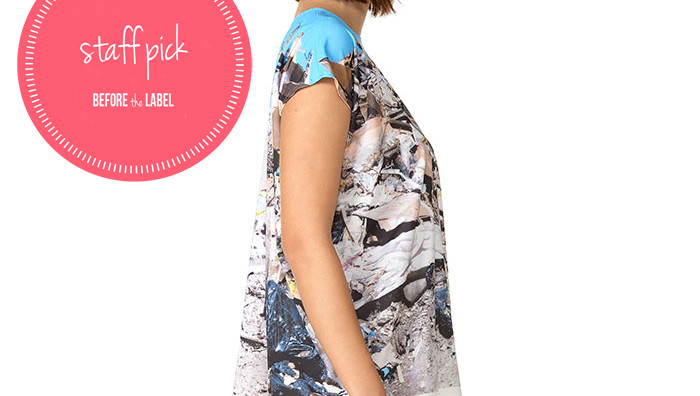
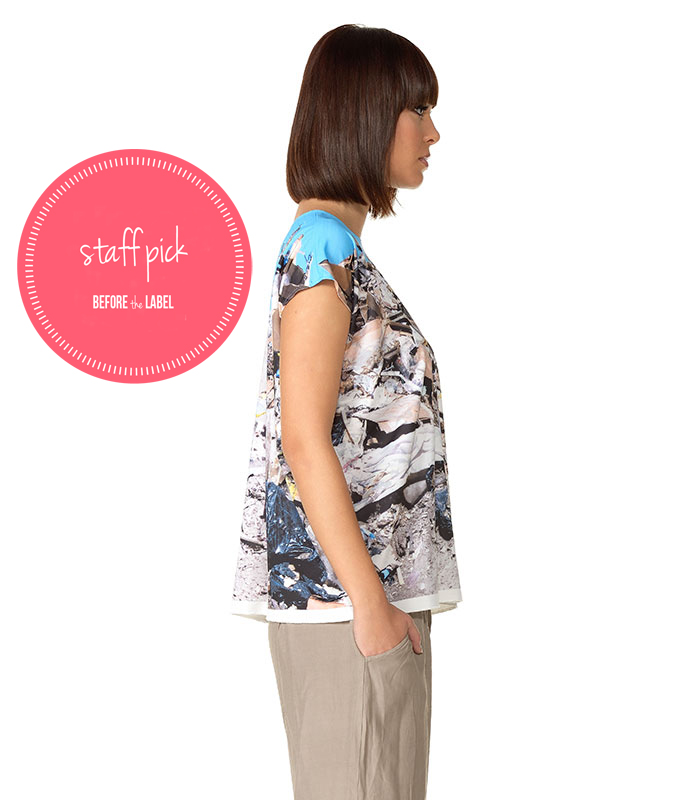
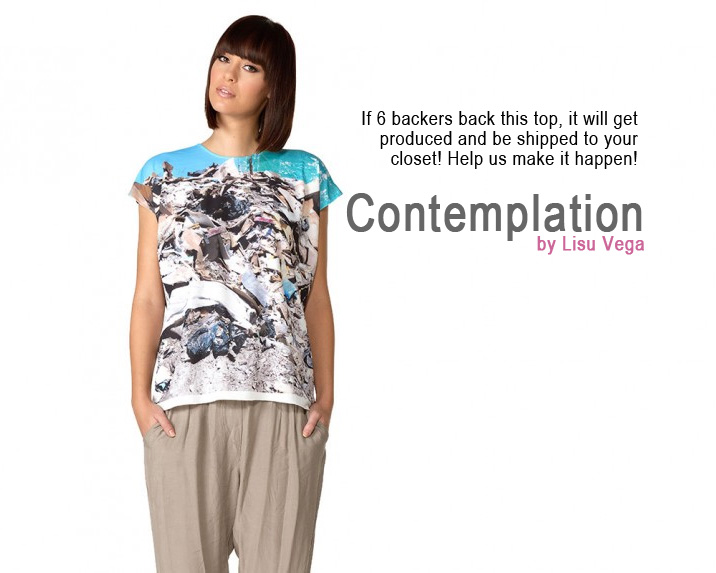
One of the most interesting designs we have on www.beforethelabel.com right now is the Contemplation top by textile designer Lisu Vega. Why do I think this top is so great? Because it’s more than just a piece of clothing, and it’s even more than just a fashion piece; it’s a work of art.
Lisu Vega creates wearable pieces, yes, but her process is that of an artist. She is inspired by where she lives, Miami, and seeks to reflect the beauty of that area through textiles and fashion. She takes pictures that reflect the true spirit of the popular vacation destination best and then turns them into panels for fabric printing. The outcome is an unique, artsy pattern that makes a statement while still flattering your figure. It’s also 100% cotton, which means that it’s 100% comfortable to wear, even on an especially long day. This isn’t just a plain tee that you throw on - this is a conversation starter and an attention-grabber.

Another plus? This whole process - from inspiration to production - happens in the USA. When you buy this item, you’re doing more than just buying a t-shirt; you’re supporting an American artist, as well as all of the American businesses needed along the way to take the shirt from concept to fruition. Personally, we’d rather wear a piece with a story than something from our local J. Crew.
And if these things don’t really matter to you, then just take a look at the shirt. It’s a gorgeous fashion piece that looks more expensive than it is. The blue at the top would flatter any complexion or hair color, the print is perfect for hiding wrinkles and stains, and the shape is meant to flatter every body type. You could wear this to the office with a blazer, out to dinner tucked into a pencil skirt, or as an upgrade to your normal white t-shirt-and-jeans uniform. We love how original the print is, too. No one spot on the shirt is the same as another. The back isn’t simply a repeat of the front; it’s a continuation of the photo with its own unique look, so there’s something new for people to see every way you turn. So prepare for some attention and admiration - wearing this top is like wearing a work of art, and it’s no coincidence that it was named “Contemplation.”
The fashion industry is often the most glamorous and underrated of industries. While almost every individual is a direct customer of the fashion industry by frequenting retailers or buying from vintage shops, many of those same customers look at the industry as one made up of hobbyists and shallow women. It evokes the scene from the film Devil Wears Prada when Miranda Priestly takes the time out to explain to her new assistant that whether you value fashion or not, you are a part of the ecosystem and you buy into it with every purchase.
Being a startup looking to change the way the fashion industry works, one of the most common remarks we hear is, “Well, I don’t really care about fashion. I can’t take it seriously.” So, we decided that it was time to break down exactly why people should care about the fashion industry (not necessarily about fashion).
1. It brings labor jobs back to the U.S.
Let’s be blunt: not everyone has or is looking to get a job that requires a masters degree. Some people are looking for jobs that allow them to utilize their skills; or gives them the opportunity to learn skills on the job. Many of these jobs are in the world of labor. The fashion industry employs laborers on multiple levels. Garment workers, pattern makers, textile designers, packing companies — all employing labor workers. With production moving abroad for cheaper workers and, often under less than ethical conditions, it is even more imperative to reevaluate the fashion industry and help emerging designers. They need low minimums and want to produce in the United States, thus creating hundreds of jobs.
2. It employs skilled artisans around the world.
Artisans are a dying breed thanks to mass production. But the fashion industry has taken up the mantel to help people by investing in their traditions. Designers go to Africa to pay workers a fair wage to create traditional handcrafted bags. Others go to South Asia to tap into the centuries old mirror work applied on hand dyed fabric. These members of the fashion industry make a direct impact on otherwise impoverished members of our global society. They do not “give charity” as part of a corporate mandate. Instead, they help members of these groups understand their value and reap its benefits. So next time you see a picture of a woman laborer in India stitching together a beautiful shawl, remember that the fashion industry is the one that employs her. Not finance. Not tech.
3. It employs your investment bank, your law firm, your accounting firm, and more.
The fashion industry includes retailers, multinationals, production houses, publishers and more. All of these companies provide business to more traditionally-accepted fields such as law, finance, and technology. Some of the biggest deals that employ JD- and MBA-holding folks come out of the fashion industry. Just ask the private equity gurus down the hall.
4. It gives creative entrepreneurs the chance to make a difference.
The same people that forget the importance of music classes in school seem to forget that everyone learns and applies knowledge differently. Not everyone has a brain wired to code or do heart surgery. Other people have a brain wired to create happiness — simple, unadulterated happiness and awe. Those people are called creatives; they give us art, architecture, music — and yes — fashion. Without individuals dedicated to creating beauty through art, we would live in one seriously boring world. The fashion industry employs those artists, and affords them the chance to be entrepreneurs in their own right. It is their opportunity to take control of their future. So when someone says they are a fashion designer, do not raise an eyebrow and ask, “Your parents let you do that?” Instead, ask them how much math goes into putting together a properly constructed garment. Then stand in awe as they explain the technical specs of one tee shirt to you. Respect.
5. Do you really want to watch the Oscars for the speeches?
That does not need to be explained further. Especially if the host is boring.
6. Whether you like it or not, what you wear says a lot about you.
Whether you throw on a tee shirt with a fun little quip or a well-tailored suit, what you wear creates an initial impression in the eyes of those that see you. It’s the same reason most offices have an office attire policy; and why you can tell the partner at a law firm from the senior associate. People notice what you wear and try to derive an understanding of who you are from there. Deny it all you want, but it is what it is.
The fact is, the fashion industry will always be around. It will morph and adjust, and it will hit market trends. But it will never go away because fashion feeds a fundamental part of each person: the way we are perceived.
Looking down upon the industry does not show intellect, but evidences a lack of understanding that the industry is part of a larger ecosystem, one that employs millions of people in production, public relations, art, textiles, finance, law, and dozens of other industries. So, instead of wondering why anyone “cares” about fashion, take the time out to accept the fact that like so many other industries, this one creates jobs and affects lives. Plus, it makes you look good.
(Originally published in Huffington Post)
Follow Benish Shah on Twitter: www.twitter.com/benishshah
Vicaire NY has now become Before the Label, the only place to crowdfund fashion.
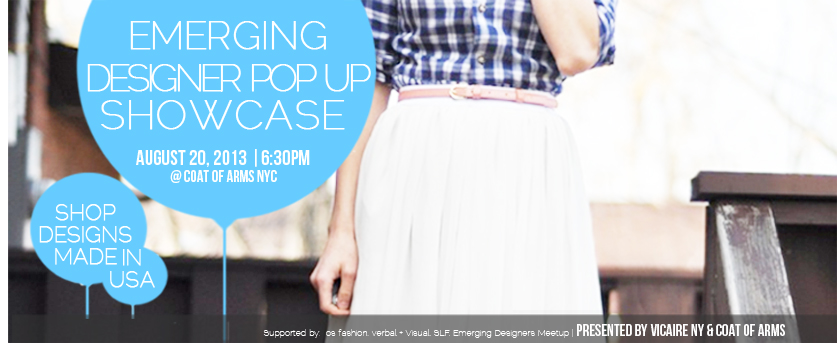

Drinks & Desserts & Emerging Fashion. What more could you want? We know: the chance to buy limited edition fashion.
WHAT | Pop up showcase featuring the best emerging designers. | WHEN | August 20, 2013, 6:30-10:00pm. | WHERE | The iconic Coat of Arms boutique on Clinton Street, frequented by celebs, buyers, and the likes. | SPONSORS | Vicaire NY, SLF, Coat of Arms, OS Fashion, Verbal + Visual, COAST NY & more coming.
Here’s your chance to shop exclusive designer pieces that are Made in USA all under one roof at the iconic Coat of Arms NYC boutique which caters to the likes of Mr. Hilfiger himself.
Join Vicaire NY & Coat of Arms, NYC. in the first ever, invite only, Emerging Designer Pop Up Showcase in LES.
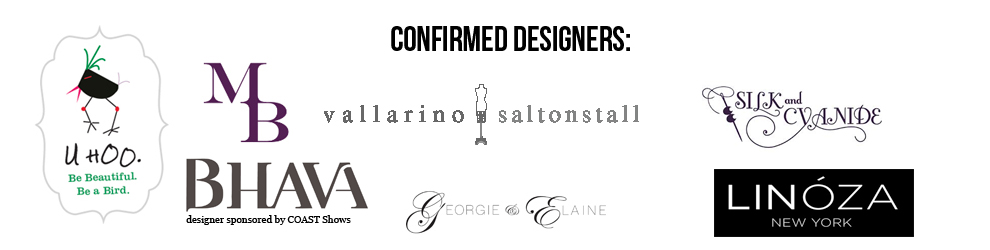
More designers are on their way!
Buyers & press: please email [email protected] for more information. RSVP HERE: http://whoozin.com/WMP-MRW-WJWU
*Please note this invite will have an attendee cap, so please don’t forget to RSVP!*
SPONSORED BY:

When we meet with emerging designers at Vicaire NY each week, we talk about the importance of producing garments locally. We speak in terms of cost-benefit analysis and how it’s critical to bring jobs back to New York. Each time we are asked the same thing, “Isn’t it cheaper to produce abroad?”
The most recent tragedy in Bangladesh, killing more than 800 people, is the most glaring answer to that question.
“Cheaper” is relative.
Emerging designers, and the fashion industry in general, feel that the time they spend on developing their designs and sourcing fabric gives them the right to charge upwards of $200 for a dress. They work in clean apartments or studios, with ventilation, lunch breaks, and pour their heart and soul into a design. When someone looks at their garment and says, “Wow, that is overpriced” they huff and puff about how much work they put into it.
Yet, when it comes to producing their line, they search out the cheapest labor possible. At that point, they do not stop to think about how much work someone may be putting into hand sewing the beading on their designs - or what the working conditions might be. They do not ask questions about how those factories abroad are undercutting the competition by over 100% - they just see a final number, and sign on the dotted line.
Cheap labor hurts the fashion market by creating a culture of overproduction, which hurts the saleability of designs and leads to fast fashion and blowout sales. Consumers are so inundated by garments that they do not want to pay a premium because they know that there will be left over stock that goes on sale. But cheap labor doesn’t just stop there, it also hurts the economic conditions of the factory workers where the garment is made.
With designers looking for the cheapest option, pitting one factory against another, the people that get hurt are the factory workers. Paid at pennies on the dollar, their economic mobility is stunted because the more designers demand cheaper labor, the lower the factory is going to pay them. Factory owners rarely reduce their cut of the total amount charged; they just reduce what they will pay to the factory workers, ignore the conditions of the factories, and do whatever they can to maintain their profit margins. That’s why the building collapse in Bangladesh happened. Because factory owners used a structure developed for a mall to house a factory with hundreds of machines weighing much more than the structure could handle. As a result, 800+ human beings died while sewing clothes for brands like Mango.
But that’s business, right?
Designers can argue this point by saying they are not running a charity - they are running a business where the bottom line matters. We get that. We run a business and at heart, I am quite the capitalist. In fact, the capitalist in me is the one that finds this culture of overproduction to be damaging to the business of fashion.
The more designers desperately demand “cheap” labor and increase production quantities to meet minimums, the bigger diservice they are doing to their own business model. The overproduced quantities will inevitably go on sale, and consumers know that. There is no need to rush and buy something because it will be gone; it won’t be. There is always more.
The fashion industry is broken not because fast fashion exists; it’s suffering because designers are beginning to think like they are fast fashion outlets. It’s not an easy problem to fix, but the first step is to understand that we are perpetuating our own problems. And others are suffering because of it.
Follow Benish Shah on Twitter: www.twitter.com/benishshah
It’s the time of year all fashion lovers wait for (esp those that just can’t access those dream-filled shows at Lincoln Center). It’s time for Fashion’s Night Out. For those of you that don’t know about FNO, here’s the lowdown: it was created in 2009 to celebrate fashion, restore consumer confidence and boost the industry’s economy during the recession. A portion of sale proceeds go to charity, and it’s a haven for celebs, publishers, media mavens, designers, and fashion lovers. In short: you’d be nuts to be miss it.
So the lovely ladies of Vicaire NY have pulled together a short-list of must-attend FNO events for 2012. If we all weren’t pulling insane hours prepping for Fashion Week, coterie, our launch, and traveling to meet emerging designers - we’d be hitting up all of these events!
Ahh Vince Camuto - how we love you. And so do the ladies behind Honestly…WTF it seems! Hit up the Vince Camuto Soho store to meet the ladies behind Honestly..WTF, design DIY custom printed tote bags, and shop must-haves from the Vince Camuto’s fall collection. There will be raffles. Stick around!
Urban Outfitters has collaborated with Rhode Island School of Design (RISD) and Philadelphia University on a limited edition collection for Fall 2012. Each student was instructed to design a capsule collection that reflects their personal style and the Urban Outfitters customer in mind. The designs are being previewed in conjunction with FNO events on September 6, 2012.
Michael Kors himself will be at 667 Madison Avenue, Michael Kors’ newest Lifestyle Store in New York City hosting a “Kors Karaoke” competition. To participate, fans around the world are invited to enter to win by nominating their favorite YouTube singing sensation to perform in a live karaoke competition on Fashion’s Night Out. The top three nominated performers will be flown in to sing their hearts out for Michael Kors and a cast of celebrity judges. The ultimate winner gets a $5,000 shopping spree. Do it.
Who doesn’t want complimentary make overs in a swank location? You don’t? Thanks just unrealistic. Go - have fun. Get yourself pampered.
Cyndi Lauper is gonna perform at Manolo Blahnik USA. It’s to celebrate fashion and Cyndi’s new musical, Kinky Boots. Cyndi will be performing at the 54th Street boutique at 8:30pm. Go relive the 80′s while buying some kinky boots of your own.